


Television Production
On Cue, Everytime.
With over 18 years in the field, we’ve worked on everything from primetime broadcasts to grassroots championships, offering scalable solutions for national networks, local stations, and team media departments alike.
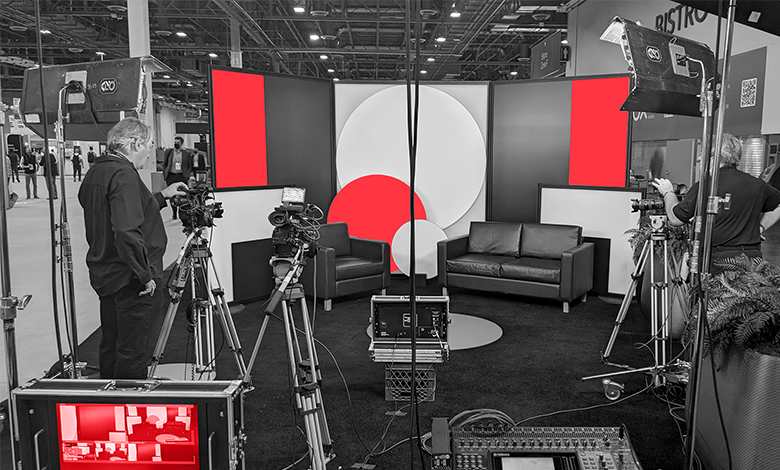
Whether you're filming from the dugout, behind the bench, or high up in the booth — we provide the cameras, crews, switching, and post that keep fans engaged and sponsors impressed.

Atomic
Television
Sports Production Services:
With over 18 years in the field, we’ve worked on everything from primetime broadcasts to grassroots championships, offering scalable solutions for national networks, local stations, and team media departments alike.
Whether you're filming from the dugout, behind the bench, or high up in the booth — we provide the cameras, crews, switching, and post that keep fans engaged and sponsors impressed.
"Aliquam libero sem, rutrum eu scelerisque ut, vehicula a erat. Phasellusac sem sed erat posuere semper sed ac nunc estibulu Vestibulum in ipsum velit."
Our of experience delivering high-stakes, high-impact content, we’ve become the go-to production partner for networks, streamers, agencies, and entertainment brands operating in Las Vegas and across the country. Whether you’re filming a live-to-air special, a branded talk show, a celebrity interview, or a streaming series pilot, we bring the crew, equipment, creative eye, and technical control needed to make it shine.
We don’t just show up with cameras — we show up with a plan, a passion, and a full production powerhouse behind us.
We provide multi-camera game coverage, a REMI streaming solution, or highlight reels for social and post-show distribution, our team has the workflow, local access, and technical precision to get it done — clean, fast, and stress-free.
From multi-camera studio builds to remote field productions, our team works fluently in both live and pre-recorded formats. We’ve called cues in crowded control rooms, patched into remote REMI systems, and delivered finished content in formats tailored for OTT platforms, YouTube, corporate networks, and traditional linear TV. Our Emmy-winning crews know how to hit their marks — and how to make your production feel effortless, even under pressure.
We provide technical directors, camera ops, A1s, V1s, replay, utility, shaders, teleprompter ops, and full creative support — all under one roof. With in-house post-production, graphics, and mobile production trucks (Neutron & Proton), we don’t just scale — we deliver.
And because we’re based in Las Vegas, we know how to navigate venues, permits, security, and talent logistics with speed and professionalism. We’ve shot at red carpet galas, inside hotel ballrooms, on rooftops, at conventions, and on location with celebrity talent — all without breaking stride or breaking your timeline.
Whether your show needs a crew for the day or a long-term partner for a season’s worth of content, Atomic Television delivers turnkey television production that looks great, sounds perfect, and meets broadcast standards every time.
Because when it’s your name in the credits, only excellence will do.
- Live and taped broadcasts
- Talk shows and interviews
- Sports coverage
- Commercials
- Reality and doc-style programming
- News specials and panel segments
Faq
Our Expert Answers
What is professional television production for broadcast and streaming? + -
Professional television production is the comprehensive process of conceptualizing, capturing, and distributing high-fidelity video content designed for national networks, streaming platforms, or global audiences. It utilizes specialized multi-camera workflows, real-time signal processing, and broadcast-certified crews to ensure a "no-fail" environment for live or taped television programming.
Core components of a multi-camera television production include:
● Broadcast-Certified Camera Chains: Sony 4K or 1080p cameras with specialized SMPTE fiber optics.
● Production Switchers: High-end hardware like the Ross Carbonite Ultra for seamless real-time transitions.
● Signal Engineering: Centralized monitoring (shading) to ensure color and exposure consistency across all camera sensors.
● Audio Intercom (Comms): Integrated systems like Green-Go or Clear-Com for director-to-crew coordination.
● Distribution and Transmission: Satellite uplink, dedicated fiber, or bonded cellular for live-to-air feeds.
Atomic Television has Emmy-winning crews and local Las Vegas facility, located just two blocks off the Strip. Unlike general video companies, we operate specialized mobile units like the Proton HD Trailer, specifically engineered to handle the massive signal density of venues like the LVCC and Caesars Forum, ensuring your show meets network standards every time.
How does broadcast television production compare to standard digital video services? + -
Broadcast television production differs from standard digital video by its requirement for SMPTE-spec redundancy, multi-camera synchronization (Genlock), and specialized engineering that prevents any single point of failure. While digital video is often sufficient for social platforms, television production is built for the high-bandwidth and strict quality-control standards of national broadcasters and streamers like Amazon Prime.
Significant technical differences include:
● Frame Rates: Television requires strict adherence to broadcast standards (e.g., 59.94 fps) versus flexible digital rates.
● Reliability: Dual-redundant power and signal paths are mandatory in television to prevent "black screens."
● Crew Depth: TV sets utilize specialized roles like V1s, A1s, and Shaders rather than a single "videographer."
● Image Quality: 10-bit 4:2:2 color sampling is the baseline for TV to allow for professional post-production grading.
Atomic Television is established by our "broadcast-first" philosophy. We don't just "press record"; we build specialized flypacks and mobile control rooms that replicate a network studio environment on-site. By using our Neutron 4K OB Van, clients receive a professional television workflow at venues like Mandalay Bay, bypassing the limitations and latency issues common with consumer-grade digital video gear.
What is REMI remote production and how is it used in television broadcasting? + -
REMI (Remote Integration Model) is a modern television production workflow where multiple camera feeds are captured on-site and transmitted over a secure network to be switched and produced at a centralized remote facility. This allows networks to maintain a smaller on-site footprint while utilizing a world-class production team located in a different geographic region.
Technical components of an Atomic REMI workflow include:
● Ultra-Low Latency Encoders: Hardware like Haivision or Teradek that transmits feeds with sub-second delay.
● Bonded Cellular/Fiber: Multiple internet backhauls to ensure transmission never drops during live segments.
● Return Video (IFB): A communication system that allows remote directors to cue on-camera talent in real-time.
● Synchronized Timing: Protocols that keep all on-site cameras in perfect frame-sync over the public internet.
Our specialized REMI-ready broadcast kits interface directly with the high-speed fiber networks in Las Vegas. Atomic Television specializes in creating "digital on-ramps" from locations like the Venetian Expo, using our Neutron mobile unit as a transmission hub. This ensures that even "remote" productions have the same technical muscle and reliability as an on-site truck.
What specialized crew members are required for a multi-camera television production? + -
A multi-camera television production requires a specialized hierarchy of technical talent trained to operate high-bandwidth broadcast matrices and perform under the "live-to-air" pressure of a network countdown. These roles ensure that the creative vision of the director is executed flawlessly while maintaining the absolute technical integrity of the visual and audio signals.
Essential television production roles include:
● Technical Director (TD): The "hands-on" operator of the Ross Carbonite switcher who executes transitions.
● Engineer in Charge (EIC): The lead technician responsible for the truck or studio’s signal health.
● A1 (Lead Audio): Manages the primary broadcast mix, announcer headsets, and audience ambiance.
● V1 (Video Engineer/Shader): Responsible for real-time color matching and exposure of all camera sensors.
● Replay Operator: Captures and plays back instant highlights or delayed segments for the broadcast.
Atomic Television has a roster of Vegas-local, Emmy-winning technicians. Because our crews work on our Atomic units year-round, they possess a "home-court advantage" in the city's largest venues. This means our EICs know exactly where the dark fiber paths are in every major ballroom on the Strip, ensuring your television project is faster, safer, and more professional than a team traveling from out of state.
What are the advantages of using a mobile broadcast truck versus a television flypack? + -
A mobile broadcast truck (OB Van) is a self-contained, climate-controlled control room that arrives pre-wired and "show-ready," while a flypack is a modular system built from portable racks inside a venue. For television production, an OB Van provides superior engineering stability and faster deployment, while a flypack is the strategic choice for productions in "land-locked" interior ballrooms or rooftop locations.
Key comparison factors for television mobile units:
● Setup Speed: Trucks (like the Proton Trailer) can be operational in under two hours; flypacks require a full day of "cabling-up."
● Environment Control: Trucks provide a quiet, air-conditioned space for critical audio and video monitoring.
● Operator Efficiency: Dedicated stations for graphics, replay, and shading facilitate better crew collaboration.
● Footprint: Flypacks can be pushed onto freight elevators to reach upper floors where trucks cannot park.
Atomic Television provides both configurations tailored for the Las Vegas market. Our Neutron 4K OB Van is compact enough to fit into the loading areas of Wynn or Bellagio where traditional semi-trucks are restricted, while our Proton 3G Trailer offers a full-sized 36-foot control room for stadium-scale broadcasts. This flexibility ensures your production maintains network-level engineering regardless of venue constraints.
How do television production companies ensure a stable live broadcast feed? + -
Ensuring a stable live broadcast feed requires the use of hardened transmission hardware and "dual-path" redundancy, typically combining dedicated fiber optics with a secondary satellite or bonded cellular uplink. This creates a fail-safe architecture that allows the program feed to reach national master control points without interruption, even if the venue's local internet infrastructure fails.
Standard broadcast transmission components include:
● Primary Fiber Path: A dedicated, high-speed circuit directly connected to a major carrier (e.g., Level 3).
● Secondary Satellite Uplink: A Ku-band or C-band dish as a backup for mission-critical broadcasts.
● Hardware Encoders: Professional appliances (not software) that handle 4K or 1080p compression.
● Signal Monitoring (QC): Dedicated monitors for checking the "return feed" to ensure successful delivery.
Atomic Television has strategic partnerships with Las Vegas venue engineers. Our mobile units are equipped to interface directly with the dark fiber networks at the LVCC and Allegiant Stadium. This allows us to provide a 10Gbps signal backbone, ensuring that your live TV show from Las Vegas has more bandwidth and security than standard AV-based streaming solutions.
What technical strategies are used for producing live television talk shows and interviews? + -
Producing a high-quality television talk show involves creating a controlled visual environment with multi-camera coverage that prioritizes speaker eye contact and high-fidelity audio. The technical setup must include "tally" systems so guests know which camera is live, and discrete audio paths (IFB) so the host can hear cues from the director in the control room.
Essential gear for television talk show production:
● Teleprompter Systems: Ensuring hosts can read scripts while maintaining direct engagement with the lens.
● ISO Recording: Capturing every camera angle independently to allow for specialized editing in post-production.
● IFB (Interruptible Foldback): Tiny earpieces for talent to receive "ear-cues" from the control room.
● Tally Lights: Visual indicators on cameras that signal when an angle is "live" or "next."
Atomic Television has experience with marquee talk show formats, such as our work for the Kelly Clarkson Show and national news panels. Atomic Television provides Sony 4K camera chains with cinematic optics that provide a shallow depth-of-field, giving your talk show a "premium" look. By using our Neutron OB Van, we bring a full Ross Carbonite switcher and studio-grade audio mixing to any Vegas suite or ballroom, transforming it into a fully functional television studio.


Let's Make Magic Happen
Your story deserves the spotlight. Reach out today, and let's craft a broadcast that not only meets expectations but shatters them.
Follow Atomic Television on Instagram