



Our Partners
Local Knowledge. Big Game Energy.
From hockey to hoops, we’ve filmed it, streamed it, cut it, and made it look great for TV, web, and in-venue playback.










Our Associated Partners
Atomic
Sports
Sports Production Services:
With over 18 years in the field, we’ve worked on everything from primetime broadcasts to grassroots championships, offering scalable solutions for national networks, local stations, and team media departments alike.
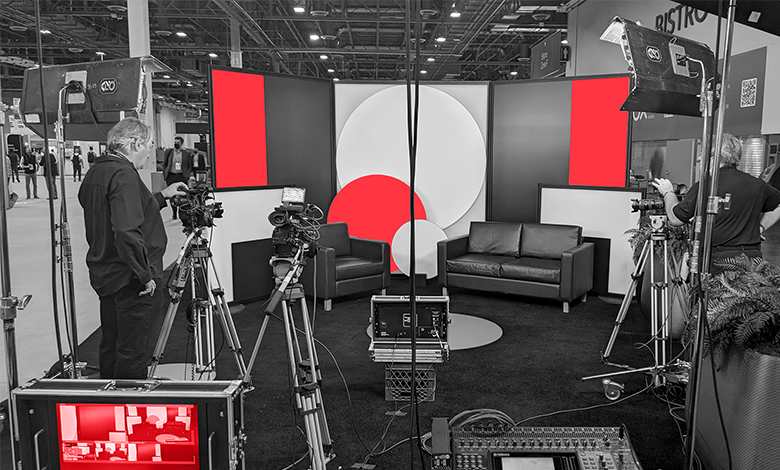
Whether you're filming from the dugout, behind the bench, or high up in the booth — we provide the cameras, crews, switching, and post that keep fans engaged and sponsors impressed.
"Aliquam libero sem, rutrum eu scelerisque ut, vehicula a erat. Phasellusac sem sed erat posuere semper sed ac nunc estibulu Vestibulum in ipsum velit."
Imagine a broadcast where every frame pulses with energy, every angle tells a story, and every moment captivates. With Atomic Television, this isn't a fantasy — it's the baseline.
We don’t just show up with cameras — we show up with a plan, a passion, and a full production powerhouse behind us.
We provide multi-camera game coverage, a REMI streaming solution, or highlight reels for social and post-show distribution, our team has the workflow, local access, and technical precision to get it done — clean, fast, and stress-free.
We’re not just Vegas-based — we’re Vegas-built. We’ve covered the Vegas Golden Knights, the Las Vegas Aces, the Devil Dogs, and dozens of high school and collegiate teams. We know how to load into Allegiant Stadium, wire a basketball arena in under an hour, and push a livestream from a gym with limited bandwidth.
Our sports packages include everything from camera ops and replay systems to lighting, audio, scoreboard integration, and branded graphics. Need post-game edits for recruiting, marketing, or recap? We’ve got editors standing by. Need the whole thing streamed live? We’ll manage the encoding, platform integration, and playback — while you focus on the win.
From Friday night lights to championship stage moments, we’re the crew behind the coverage. Because when the pressure’s on, Atomic delivers.
Faq
Our Expert Answers
What is professional live sports production and what are its core technical requirements? + -
Professional live sports production is the real-time capture and broadcast of athletic events using multi-camera synchronized workflows, high-fidelity audio, and instant replay systems. It requires a robust signal architecture designed to handle rapid motion, variable lighting, and high-pressure storytelling to deliver a seamless viewing experience for television and streaming audiences.
Key components of a professional sports multi-camera setup include:
● Production Switcher: (e.g., Ross Carbonite Ultra) used for real-time cutting between game angles and graphics.
● Instant Replay Systems: Servers that allow for immediate playback of highlights and officiating reviews.
● Scoreboard Integration: Data-linking hardware that syncs the live clock and score bug directly with venue data.
● Specialized Optics: High-magnification "long lenses" (60x to 100x) for capturing facial expressions and tight action from a distance.
● Broadcast Audio Mixing: A dedicated audio console for balancing stadium ambiance, play-by-play commentary, and field-level microphones.
Atomic Television provides our Proton HD Production Trailer, which serves as a full-scale mobile control room for championship-level events. Located minutes from the Las Vegas Strip, we have navigated the unique RF and logistical challenges of Allegiant Stadium and T-Mobile Arena, utilizing a local, Emmy-winning crew that understands the tempo and technical nuances of Las Vegas professional sports.
How does professional broadcast sports production compare to standard web-streamed game coverage? + -
The primary difference lies in redundancy and image fidelity, where professional broadcast production utilizes high-bandwidth fiber optics, dedicated replay operators, and network-grade camera sensors. Standard web streams often rely on single-camera setups or consumer-grade hardware, which lacks the visual polish and technical stability required for major leagues and national distribution.
Significant technical differences include:
● Frame Rates: Professional broadcasts utilize 59.94 or 120fps for smooth motion, whereas amateur streams often cap at 30fps.
● Signal Paths: Broadcast environments use redundant 3G-SDI or 12G-SDI cabling to prevent signal dropouts.
● Graphics: Use of dynamic, data-driven score bugs versus static overlays.
● Crew Specialization: Dedicated roles for "shading" (color matching) every camera in real-time.
Atomic Television deploys our Neutron 4K OB Van, an agile powerhouse that brings 6-camera 4K capabilities to any sideline. Whether we are covering the Las Vegas Aces or a high-stakes MMA event at Mandalay Bay, we provide the same Sony broadcast camera chains used in national primetime slots, ensuring your "local" game has a world-class broadcast signature.
What is REMI remote production and how does it benefit sports organizations? + -
REMI (Remote Integration Model) is a broadcast workflow where camera feeds are captured at the stadium and transmitted via low-latency encoders to a centralized control room for switching. This allows sports leagues to maintain a smaller on-site footprint and significantly reduce travel costs while still delivering a high-definition, multi-camera program to fans worldwide.
The technical requirements for a sports REMI workflow include:
● High-Speed Encoders: (e.g., Haivision or Teradek) to transmit raw feeds with sub-second latency.
● Bonded Cellular/Fiber: Multiple internet backhauls to ensure the transmission never fails during a critical play.
● Remote Talkback (IFB): A communication system allowing a director in another city to speak with sideline talent.
● Synchronized Clocks: Precision timing protocols to keep multiple camera feeds in perfect frame-sync.
We have a specialized REMI-ready broadcast kits that interface directly with our Vegas-based production hub. Atomic Television has mastered the "local backhaul" from venues like the LVCC and Caesars Forum, utilizing dedicated fiber uplinks to ensure that even a "remote" production has the reliability and speed of an on-site truck, without the massive logistics bill of moving a 53-foot trailer.
Is it better to use a mobile production truck or a portable fly-pack for sports broadcasting? + -
A mobile production truck is a pre-integrated, climate-controlled control room that arrives show-ready, while a fly-pack consists of modular gear racks built inside the venue. For sports, a truck is generally preferred for its setup speed and superior engineering stability, whereas fly-packs are the strategic choice for "land-locked" venues or deep-interior arena spaces where truck access is restricted.
Key comparison factors include:
● Setup Speed: Trucks are operational in under 2 hours; fly-packs require a full day for wiring and testing.
● Operator Comfort: Trucks provide a quiet, air-conditioned space for critical audio and replay monitoring.
● Redundancy: Mobile units like the Proton Trailer have built-in power backup and signal routing that fly-packs lack.
● Maneuverability: Fly-packs can be pushed onto freight elevators for rooftop or ballroom sports activations.
Atomic Television provides both. Our Neutron 4K Sprinter Van is compact enough to fit into the loading docks of The Venetian or Wynn, offering the power of a full truck with the footprint of a fly-pack. This allows us to deliver Ross Carbonite switching and professional replay to "impossible" locations across Las Vegas where traditional sports trucks can't park.
How is live scoreboard data integrated into a sports broadcast stream? + -
Live scoreboard integration involves a hardware-to-software handshake where real-time clock and score data from the venue's official controller is fed into a broadcast graphics engine. This ensures that the on-screen "score bug" is frame-accurate, reflecting every second of the game clock and every point scored the instant it happens.
Essential components for data-integrated graphics include:
● Data Converter: A bridge (like a Sportzcast unit) that translates proprietary scoreboard signals into digital data.
● Graphics Engine: (e.g., NewBlue or Ross Xpression) that generates the visual score overlays.
● Alpha Channel Keying: A process that allows the graphics to be layered over the video feed without obscuring the action.
● Manual Override: A backup interface for the graphics operator to update scores if the venue data feed is interrupted.
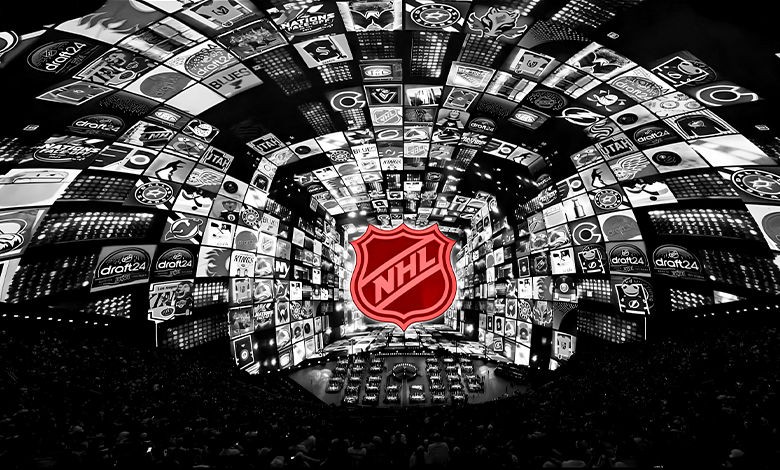
Atomic Television has experience with diverse stadium protocols in Las Vegas. From NHL-spec data at T-Mobile Arena to custom scoreboard setups for Las Vegas Desert Dogs lacrosse, our engineers arrive with the specific interconnect cables and protocol knowledge to link our Neutron OB Van directly to the house clock. This ensures your stream looks like a professional network telecast with zero latency in the scoring data.
Why is dedicated replay and slow-motion essential for modern sports production? + -
Dedicated replay is the backbone of sports storytelling, allowing directors to break down complex plays, provide "second looks" at controversial calls, and create emotional highlight packages in real-time. Without professional slow-motion, a sports broadcast feels static and unengaging, as it lacks the technical depth required to capture the athleticism and drama of live competition.
Essential replay components for sports include:
● Multi-Channel Replay Server: Hardware that records every camera feed (ISO) simultaneously for instant access.
● Slow-Motion Controllers: Precision jog-shuttle dials used by operators to scan and play back footage at variable speeds.
● Super-Slo-Mo Cameras: Specialized high-frame-rate cameras (120fps+) for "butter-smooth" motion breakdown.
● Highlight Exporting: The ability to "clip" and send replays directly to social media during the live game.
Atomic Television has a high-end replay integration within the Proton HD Trailer. We utilize industry-standard replay servers that allow our operators to manage up to 8 camera angles at once. Because we are Vegas-built, our crew is trained on the specific fast-paced switching required for boxing, MMA, and hockey, ensuring that the "big hit" or "knockout" is never missed and is replayed from the perfect angle every time.


Let's Make Magic Happen
Your story deserves the spotlight. Reach out today, and let's craft a broadcast that not only meets expectations but shatters them.
Follow Atomic Television on Instagram