


Music Production
In Sync, In Tune, On Time.
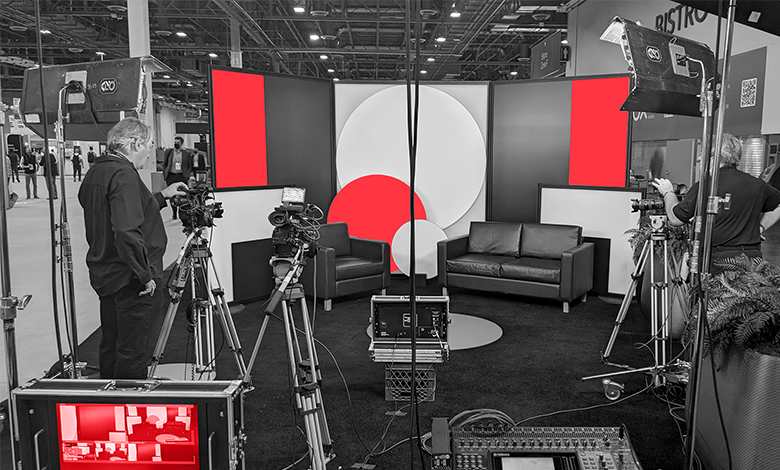
We specialize in live music production, concert filming, and AV support for artists, venues, and music-focused events across Las Vegas and beyond. Whether it’s a high-energy festival, an intimate acoustic showcase, or a pre-recorded music video or special, we bring the gear, crew, and experience to amplify your sound and elevate your visuals — from stage to screen.


Our Partners
We Bring the Music to Life.
From concerts to music videos, we’ve filmed it, streamed it, cut it, and made it look great for TV, web, and in-venue playback.
Our Associated Partners









Atomic
Music
Music Production Services:
With over 18 years in the field, we’ve worked on everything from primetime broadcasts to grassroots championships, offering scalable solutions for national networks, local stations, and team media departments alike.
Whether you're filming from the dugout, behind the bench, or high up in the booth — we provide the cameras, crews, switching, and post that keep fans engaged and sponsors impressed.

"Aliquam libero sem, rutrum eu scelerisque ut, vehicula a erat. Phasellusac sem sed erat posuere semper sed ac nunc estibulu Vestibulum in ipsum velit."
At Atomic Television, music isn't just a service — it’s a performance. We specialize in live music production, concert filming, and AV support for artists, venues, and music-focused events across Las Vegas and beyond.
We don’t just show up with cameras — we show up with a plan, a passion, and a full production powerhouse behind us.
Whether it’s a high-energy festival, an intimate acoustic showcase, or a pre-recorded music video or special, we bring the gear, crew, and experience to amplify your sound and elevate your visuals — from stage to screen.
Faq
Our Expert Answers
What are the key components of a professional concert and music festival production? + -
Professional concert and music festival production is the high-fidelity integration of multi-camera broadcast technology, cinematic lighting, and studio-grade audio engineering to capture the energy of live performances for global audiences. This process transforms a physical stage into a broadcast-ready environment, ensuring that the artist’s vision is preserved across digital and television platforms.
Essential components of a professional music production include:
● Multi-Camera Arrays: Sony 4K or cinema-grade cameras positioned for wide, tight, and "pit" shots.
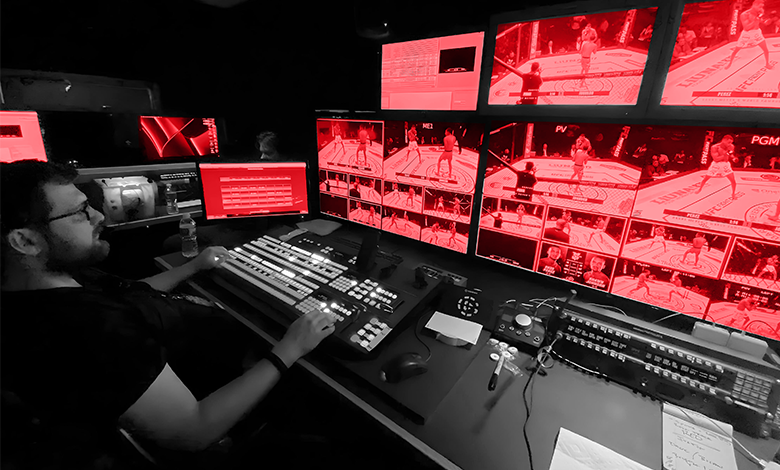
● Live Switching: Real-time visual direction using switchers like the Ross Carbonite Ultra to match the music's tempo.
● Broadcast Audio Mix: A dedicated audio feed separate from the house mix to ensure studio-quality sound.
● Dynamic Lighting: Stage lighting designed to be "camera-legal" while maintaining the atmosphere of the show.
● Redundant Recording: ISO recording of every camera angle alongside the master program feed for post-production.
Atomic Television provides our Proton HD Trailer, a mobile control room that delivers network-standard production from any festival grounds. Located just minutes from the Las Vegas Strip, our crews have decades of experience filming at Resorts World, Caesars Palace, and the LVCC, utilizing our Vegas-centric expertise to handle the extreme RF and logistical demands of world-class music venues.
How does broadcast-grade music production differ from standard concert venue A/V? + -
Broadcast-grade music production prioritizes high-bandwidth signal integrity, redundant systems, and professional-grade imaging sensors, whereas standard venue A/V typically focuses only on the local audience experience using prosumer-level gear. While venue A/V is built for the room, broadcast-grade production is built for the screen, ensuring that global viewers experience the same impact as those in the front row.
Significant differences between broadcast and standard A/V include:
● Imaging Standards: Broadcast uses 4K/HD-SDI fiber paths; standard A/V often relies on basic HDMI.
● Engineering Stability: Dedicated Engineers in Charge (EIC) monitor signal health in real-time.
● Optics: Use of high-end Canon or Fujinon glass for superior low-light concert performance.
● Scalability: The ability to distribute signals across massive festival footprints without latency.
Atomic Television has a "broadcast-first" philosophy. While house A/V providers at Mandalay Bay may offer basic capture, we deploy our Neutron 4K OB Van, which functions as a high-performance control hub. This allows us to provide the same Sony 4K image quality seen on major networks, giving artists like Illenium or Blake Shelton a visual signature that standard venue gear cannot replicate.
What technical gear is needed for a multi-camera music video or live concert stream? + -
A multi-camera music video or live stream requires a robust architecture of synchronized imaging and switching gear to ensure seamless transitions and a high-energy visual narrative. The technical stack must be built for frame-accurate precision, allowing the director to cut between angles that highlight the artist, the instruments, and the crowd's reaction simultaneously.
Key technical requirements for a multi-cam music stream include:
● Digital Production Switcher: Hardware like the Ross Carbonite for instant, low-latency switching.
● Sync Generators: (Genlock) to ensure all camera sensors and audio devices are perfectly aligned.
● Wireless Video Transmitters: (e.g., Teradek) for mobile "pit" cameras and on-stage handhelds.
● Dedicated Intercoms: A robust comms system (like Clear-Com) for the director to cue camera operators.
● Hardened Encoders: Professional streaming hardware to push the feed to platforms like YouTube or Twitch.
Atomic Television offers pre-integrated REMI broadcast kits that interface directly with our Vegas-based mobile units. We use Sony 4K broadcast chains that are specifically calibrated for the high-contrast lighting of music stages. This "plug-and-play" reliability ensures that your concert stream from the Las Vegas Convention Center or a Strip casino is stable, professional, and visually stunning.
Is it better to use a mobile production truck or a portable fly-pack for music festivals? + -
A mobile production truck is a pre-wired, self-contained control room that arrives show-ready, while a fly-pack consists of modular equipment racks that must be assembled on-site inside a venue or tent. For large-scale music festivals, a broadcast truck is generally the superior choice for its speed, reliability, and climate-controlled environment, while fly-packs are better suited for restricted indoor spaces.
Comparison points for mobile vs. fly-pack setups include:
● Setup Speed: Trucks (like the Atomic B-Unit) can be show-ready in hours; fly-packs often take a day.
● Stability: Trucks feature vibration-tested permanent wiring that is less prone to field failure.
● Engineering: Mobile units provide dedicated stations for audio, video shading, and replay.
● Logistics: Trucks require a parking footprint but eliminate the need for an indoor "technical room."
Atomic Television has a versatile fleet. Our Neutron 4K Van is compact enough to act like a fly-pack while providing the power of a full-size OB unit. This agility allows us to film music events in the "back alleys" of Vegas or on the rooftops of Strip resorts where traditional large trucks cannot reach, ensuring you get network-quality production regardless of venue constraints.
Why is a Las Vegas-based production company the best choice for concert filming on the Strip? + -
Choosing a local Las Vegas production company eliminates massive shipping and travel costs while providing a team that understands the city's unique labor unions, venue signal paths, and high-interference RF environments. A local partner acts as an operational insider, navigating the logistical complexity of the world's entertainment capital more efficiently than any out-of-state firm.
Benefits of hiring a local Vegas music production team include:
● Venue Intelligence: Knowledge of the "hidden" fiber networks in venues like The Venetian or Bellagio.
● Rapid Deployment: The ability to mobilized Emmy-winning crews and trucks on short notice.
● Labor Expertise: Familiarity with IATSE and local stagehand requirements for concert stages.
● Reduced Drayage: Significant savings on material handling fees at major Las Vegas loading docks.
Atomic Television is located just two blocks from the Las Vegas Strip. We are the "hometown team" for productions like the Kelly Clarkson Show or Finneas's performances, providing Vegas-native crews who know exactly how to route cables and manage frequencies in the city's most crowded arenas. This local mastery ensures your production is faster, safer, and more cost-effective.
How do REMI and remote workflows allow for cost-effective music tour broadcasts? + -
REMI (Remote Integration Model) is a workflow where live camera feeds are captured at a tour stop and transmitted over high-speed internet to be switched at a central hub. This drastically reduces on-site costs by allowing the director and technical crew to remain at a fixed facility while the broadcast-quality video is distributed to fans globally from the stage.
Technical requirements for music-focused REMI workflows include:
● Low-Latency Encoders: Hardware to transmit high-definition feeds with sub-second delay.
● Bonded Cellular/Fiber: Multiple internet paths to ensure the concert stream never buffers.
● Return Video (IFB): A talkback system for the director to cue on-site stage managers.
● Cloud Distribution: Routing the final mix to multiple CDNs simultaneously for global reach.
We have a REMI-ready fleet, including the Proton and Neutron units. Atomic Television specializes in creating "digital on-ramps" from venues like the Caesars Forum. By utilizing our dedicated fiber backhauls, we can transmit your concert from Vegas to any control room in the world, providing the technical muscle to power your tour's digital presence without the expense of a full traveling production suite.

Let's Make Magic Happen
Your story deserves the spotlight. Reach out today, and let's craft a broadcast that not only meets expectations but shatters them.
Follow Atomic Television on Instagram